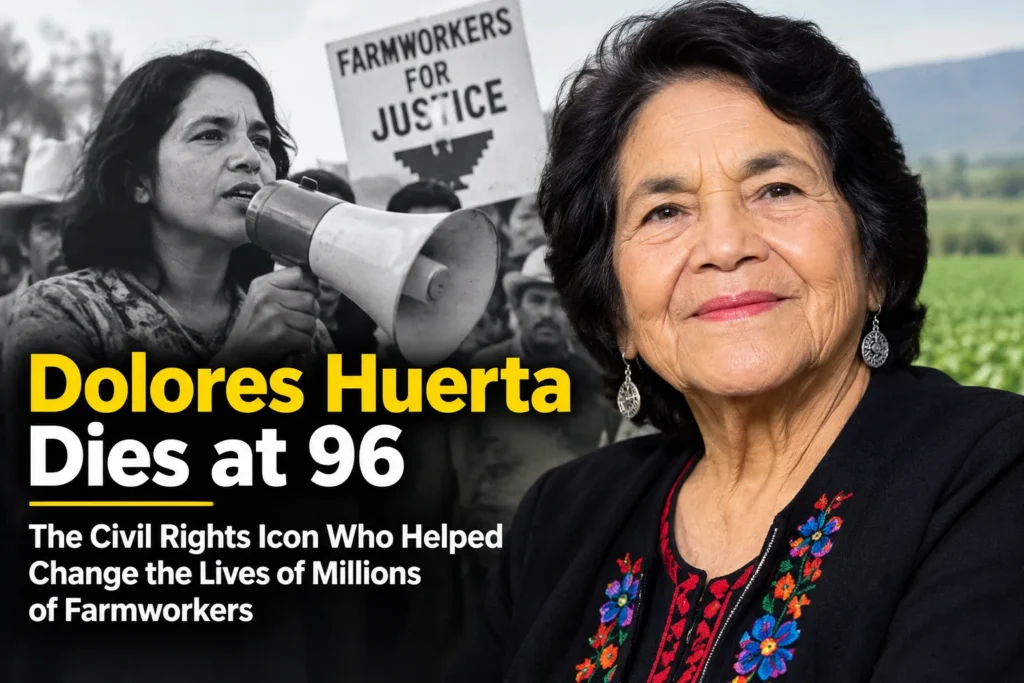

Dolores Huerta, the pioneering farmworker organizer and civil rights activist whose decades of work helped transform labor rights in the United States, has died at the age of 96. Her death marks the loss of one of the most influential voices in the fight for fair wages, better working conditions and equal rights for Latino communities.
Dolores Huerta spent more than seven decades challenging powerful institutions and organizing workers who often had little political influence. Her work helped bring national attention to the difficult conditions faced by agricultural laborers and inspired generations of activists to continue fighting for social justice.
Dolores Huerta Built a Movement for Farmworkers
Born on April 10, 1930, in Dawson, New Mexico, Huerta grew up in California’s San Joaquin Valley, where she witnessed the struggles faced by working families. Her experiences helped shape her determination to challenge poverty, discrimination and unfair treatment.
Before becoming a full-time organizer, Huerta worked as a teacher. She became increasingly frustrated by the hardships experienced by children from farmworker families, many of whom lacked basic necessities.
Rather than accept those conditions, she decided to work directly with the communities affected by them. Her efforts eventually helped establish one of the most important farmworker movements in American history.
The United Farm Workers Changed Labor History
In 1962, Huerta joined César Chávez in founding the National Farm Workers Association, which later became part of the United Farm Workers movement.
The organization fought for improved wages, safer working conditions and greater respect for agricultural workers. Many farmworkers faced long hours, low pay and limited protection against exploitation.
Huerta played a central role in organizing campaigns, negotiating with employers and encouraging consumers to support workers through boycotts. These efforts helped turn farmworker rights into a national issue.
Her work also challenged the assumption that agricultural laborers had little power to influence the companies and industries that depended on them.
‘Sí Se Puede’ Became a Lasting Message of Hope
Huerta is closely associated with the phrase “Sí se puede,” which translates into English as “Yes, we can.”
The slogan emerged from her organizing work and became a powerful expression of determination among farmworkers and civil rights activists. Its message eventually reached audiences far beyond the labor movement.
The phrase later became widely recognized in American political life, including during Barack Obama’s 2008 presidential campaign.
For Huerta, the message represented more than a memorable slogan. It reflected her belief that ordinary people could create meaningful change when they organized, worked together and refused to give up.
Her Activism Extended Beyond Workers’ Rights
Although Huerta became famous for her work with agricultural laborers, her activism extended into women’s rights, education, voting access and Latino political representation.
She encouraged women to take leadership positions and pushed for greater participation in public life. Her work helped challenge traditional expectations about who could lead social and political movements.
Her commitment came with personal risks. Huerta was arrested numerous times during her activism and suffered serious injuries after being struck by a police officer during a peaceful demonstration in San Francisco in 1988.
Despite those experiences, she continued advocating for change and remained an influential figure for younger generations of organizers.
Dolores Huerta Leaves a Legacy That Will Endure
Huerta received numerous honors for her contributions, including the Presidential Medal of Freedom in 2012. Yet her influence cannot be measured through awards alone.
Her organizing helped demonstrate how collective action could improve conditions for workers who had long been overlooked. She also helped establish a model for community activism that continues to influence labor campaigns and civil rights organizations.
In 2026, Huerta also spoke publicly about sexual abuse she said she experienced at the hands of Chávez decades earlier. She explained that she had kept those experiences private for years because she feared harming the farmworker movement they had built together.
Her disclosure brought renewed attention to her own experiences and to the importance of recognizing the women whose contributions helped shape major social movements.
Huerta’s death at 96 closes a remarkable chapter in American civil rights history. Her message of collective action, dignity and perseverance remains relevant to workers and activists seeking a fairer society.
FAQs About Dolores Huerta
1. Who was Dolores Huerta?
Dolores Huerta was an American labor leader and civil rights activist who co-founded the farmworker organization that became the United Farm Workers. She spent decades fighting for workers’ rights, fair wages and social equality.
2. How old was Dolores Huerta when she died?
Huerta was 96 years old. She was born on April 10, 1930.
3. What does ‘Sí se puede’ mean?
“Sí se puede” means “Yes, we can” in English. The slogan became closely associated with Huerta’s organizing work and inspired activists and political movements across the United States.



Pingback: Spain Train Crash: At Least 68 Dead as Two High-Speed Trains Collide in Toledo - GyanDe.Com