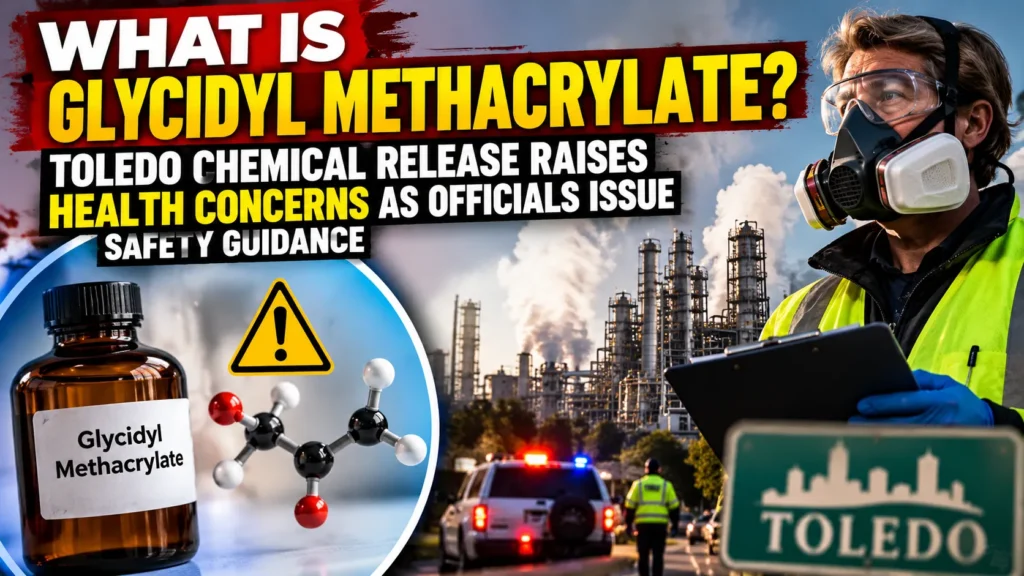

A chemical release in north Toledo has raised questions about glycidyl methacrylate, an industrial chemical that can pose health risks depending on the level of exposure and how it enters the body. Local health officials are outlining potential dangers and explaining what residents should know following the incident.
The key concern is whether people nearby may have been exposed and whether they are experiencing symptoms. Understanding how this chemical behaves, where it is used and what precautions matter can help residents make informed decisions while authorities assess the situation.
What Is Glycidyl Methacrylate?
Glycidyl methacrylate, often abbreviated as GMA, is a colorless industrial chemical used to manufacture specialty polymers, coatings, adhesives and other materials. It contains chemical groups that allow it to bond with other substances, making it useful in industrial production.
Although it has valuable commercial applications, GMA is not a chemical people should handle without appropriate training and protective equipment. Its potential effects depend on the concentration, duration of exposure and route through which it enters the body.
Why Is the North Toledo Chemical Release a Concern?
Any unexpected release of an industrial chemical can create uncertainty for people living or working nearby. The immediate questions are how much material escaped, where it traveled and whether anyone came into contact with it.
The risks from a release can vary considerably. A person close to the source may face a different level of exposure from someone farther away. Weather conditions, ventilation and the circumstances of the incident can also influence how a chemical spreads.
Residents should rely on updates from local emergency responders and public health officials rather than assumptions about the danger based on the chemical’s name alone.
What Health Risks Can Glycidyl Methacrylate Cause?
Glycidyl methacrylate can irritate the skin, eyes and respiratory system. Contact with the liquid or its vapors may cause discomfort, depending on the concentration and circumstances of exposure.
Potential warning signs can include:
- Burning or irritation in the eyes
- Redness, itching or irritation of the skin
- Coughing or throat discomfort
- Breathing difficulties following exposure
GMA is also recognized as a chemical that can cause skin sensitization, meaning repeated contact may lead to allergic skin reactions in some people. Occupational exposure assessments also consider its potential genotoxic and cancer-related hazards.
These hazards do not mean everyone near a release will develop health problems. The actual risk depends on the amount of chemical encountered and the duration and nature of exposure.
What Should Toledo Residents Do After the Release?
Anyone who believes they may have been exposed should follow instructions issued by local emergency management officials and the health department. Depending on the circumstances, authorities may advise people to leave an affected area, remain indoors or avoid a particular location.
Residents can take several sensible precautions:
- Stay away from the release site and any restricted areas.
- Follow official evacuation or shelter-in-place instructions.
- Avoid touching unknown liquids, residues or contaminated materials.
- If the chemical contacts the skin or eyes, rinse immediately with plenty of water and seek medical advice.
- Move to fresh air if exposed to fumes and seek urgent medical help for breathing difficulties.
People with persistent symptoms should contact a healthcare professional and explain when and where the possible exposure occurred. Severe breathing problems or significant eye exposure require prompt medical attention.
How Is Glycidyl Methacrylate Used and Controlled?
GMA is used in industrial processes that produce resins, coatings, adhesives and specialty plastics. Workers handling it may need chemical-resistant gloves, eye protection, suitable protective clothing and ventilation designed for the specific task.
Industrial facilities generally manage chemicals through safety procedures, appropriate storage, exposure controls and emergency response plans. Following a release, investigators may examine the source, the amount released, the affected area and whether additional cleanup or monitoring is necessary.
For north Toledo residents, the most important information will come from verified updates about the incident, including any confirmed exposure findings and instructions for people who may have been affected.
FAQ
1. Is glycidyl methacrylate dangerous to humans?
Yes, it can be hazardous, particularly when exposure occurs at harmful concentrations. It can irritate the eyes, skin and respiratory tract and may cause allergic skin sensitization. The actual risk depends on the exposure.
2. What are the symptoms of glycidyl methacrylate exposure?
Possible symptoms include eye irritation, skin redness, coughing, throat discomfort and breathing problems. Symptoms vary depending on the amount and route of exposure. Anyone experiencing serious symptoms should seek medical attention.
3. How can residents stay safe after a chemical release?
Residents should avoid the affected area, follow official emergency instructions and never touch unidentified chemical residues. Anyone who suspects exposure should move away from the source when safe, follow appropriate decontamination guidance and contact a healthcare professional if symptoms develop.



Pingback: Andrew Shue and Marilee Fiebig Announce Engagement After Amy Robach and T.J. Holmes’ Private Wedding 1 Big News - GyanDe.Com