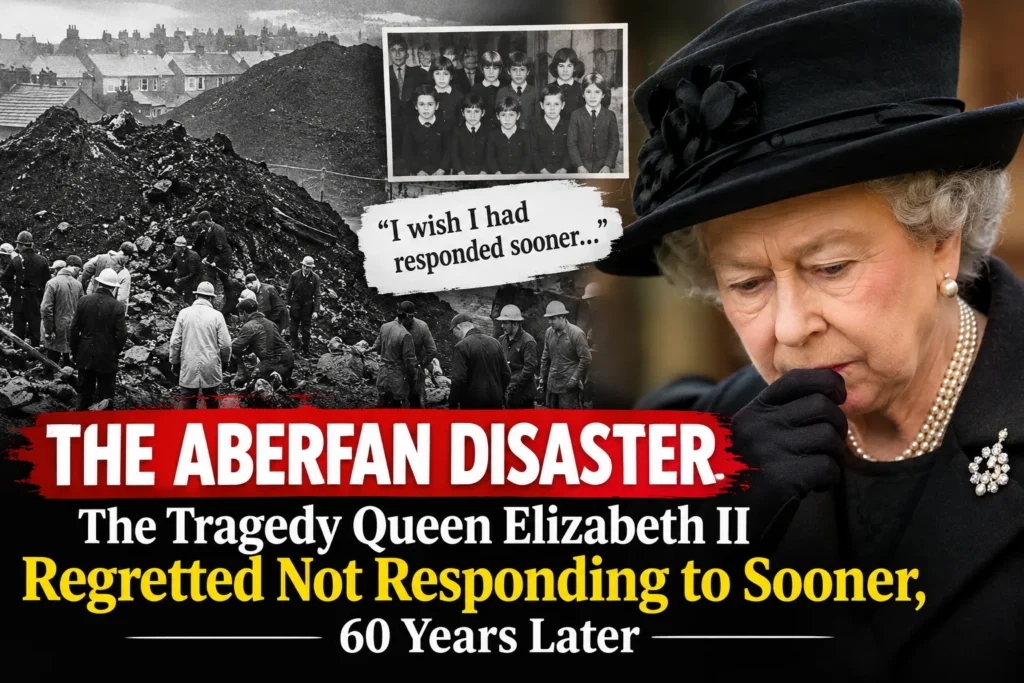

On October 21, 1966, a devastating disaster in the Welsh village of Aberfan claimed the lives of 144 people, including 116 children. The tragedy became one of the darkest moments in modern British history and left a lasting mark on Queen Elizabeth II, whose delayed visit to the village later became a source of personal regret.
What Happened in Aberfan on October 21, 1966?
The disaster began when a huge pile of mining waste collapsed on a hillside above Aberfan, a coal-mining village in South Wales. Heavy rain had caused water to build up beneath the waste, turning it into a fast-moving mass of black mud and debris.
The material rushed downhill and struck Pantglas Junior School just as children were attending their morning lessons. Nearby homes were also destroyed. By the time the rescue operation ended, 144 people had died, including 116 children, most of them between seven and ten years old.
Families who had sent their children to school that morning were suddenly left searching for them among the wreckage. The disaster shocked Britain and raised painful questions about whether the tragedy could have been prevented.
Why Queen Elizabeth II Did Not Visit Immediately
Queen Elizabeth II learned about the disaster as rescue teams struggled to reach trapped children. However, she did not travel to Aberfan straight away. Instead, Prince Philip visited the village on October 22, the day after the collapse, to see the devastation and meet those involved in the rescue effort.
The Queen Elizabeth II decision was influenced by concerns that her presence might distract emergency workers during the desperate search for survivors. A royal visit would bring security staff, officials and public attention at a time when rescuers needed to concentrate on their work.
Even so, her absence attracted criticism. Many people expected the monarch to appear in person during a national tragedy of such scale. The question was not simply where the Queen Elizabeth II was, but whether the country’s most prominent public figure should have been present with grieving families.
The Visit That Became a Lasting Regret
On October 29, eight days after the disaster, Queen Elizabeth II finally arrived in Aberfan with Prince Philip. She met bereaved parents, spoke with residents and viewed the area where the school had stood.
One particularly moving moment involved a young girl who presented theQueen Elizabeth II with flowers bearing a message from the surviving children of Aberfan. The gesture captured the scale of the loss in a way that official statements could not.
In later years, the Queen’s delay was widely described as one of her greatest regrets. Accounts of her reflections suggest she understood that people needed more than practical assistance during a disaster. They also needed to see their monarch standing beside them when their community was broken by grief.
Her visit began a long association with Aberfan. She returned to the village several times during her reign, maintaining a connection with a community that had experienced unimaginable loss.
A Disaster That Could Have Been Prevented
The tragedy was not simply the result of terrible weather. Investigators found serious failures in the management of the coal waste tips above the village. A public inquiry concluded that the National Coal Board bore responsibility for the disaster.
The findings intensified public anger because warnings about the dangers of the tips had been raised before the collapse. The inquiry exposed failures in communication, supervision and decision-making that had left residents living beneath a dangerous mass of mining waste.
The Aberfan Disaster Memorial Fund was established to support the community and bereaved families. However, controversy continued over money taken from the fund to help pay for removing the remaining tips. The dispute became another painful chapter in the village’s struggle for justice.
Aberfan Remembered 60 Years Later
Six decades after the disaster, Aberfan remains a powerful reminder of the human cost of institutional failure. On October 21, 2026, King Charles III, Queen Camilla and Prince William joined survivors, relatives and residents to remember those who died.
The anniversary brought renewed attention to the families who have carried their grief across generations. Survivors have also helped preserve the memories of the children and teachers whose lives ended that morning.
Queen Elizabeth II died in 2022, but her connection with Aberfan remains part of her legacy. Her delayed response became a lesson about leadership, public responsibility and the importance of showing compassion when people need it most.
The tragedy cannot be undone, and no royal visit could have repaired the loss suffered by the families. But the story of Aberfan continues to ask an important question: when disaster strikes, how quickly must those in power show that they care?
FAQs
1. What was the Aberfan disaster?
The Aberfan disaster occurred on October 21, 1966, when a coal-mining waste tip collapsed onto a school and nearby homes in South Wales, killing 144 people, including 116 children.
2. Why did Queen Elizabeth II wait eight days to visit Aberfan?
The Queen was concerned that a royal visit could distract rescuers during the search for survivors. She sent Prince Philip first and visited the village herself eight days after the disaster.
3. Why did Queen Elizabeth II regret her delayed visit?
Her delay was widely described as a major personal regret because she later recognised the importance of being physically present to comfort people during a national tragedy. Survivors, however, have also noted that an earlier royal visit could have disrupted the rescue operation.