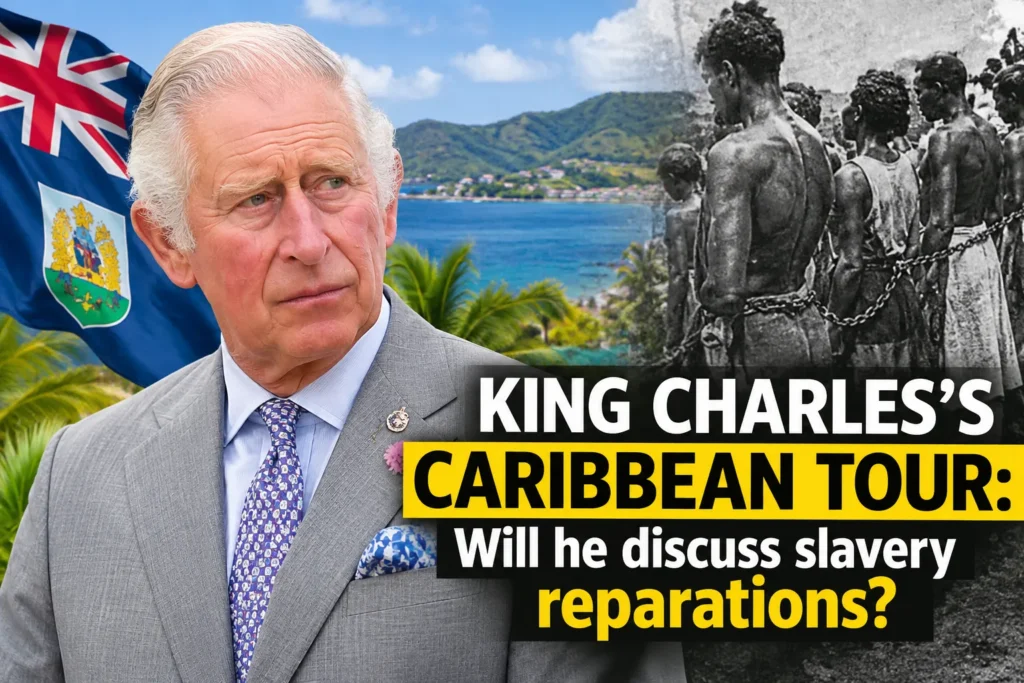

King Charles’s Caribbean tour is bringing renewed attention to one of the most sensitive issues in Britain’s relationship with its former colonies: slavery reparations. As Caribbean nations continue to demand acknowledgment of the lasting damage caused by the transatlantic slave trade, questions are growing over whether the King will address the issue during his royal engagements.
The debate puts the British monarchy in a difficult position. While the royal family has taken steps toward acknowledging slavery’s historical legacy, Caribbean leaders and campaigners want more than expressions of regret. For many, the central question is whether Britain will support meaningful action to address the consequences of centuries of exploitation.
Why Slavery Reparations Remain a Major Issue
The transatlantic slave trade forcibly transported millions of Africans to the Americas and the Caribbean, where enslaved people were subjected to brutal conditions on plantations. Britain played a major role in this trade before Parliament passed legislation abolishing it in 1807. Slavery was subsequently abolished across most of the British Empire under the Slavery Abolition Act 1833, with the law taking effect in 1834.
However, the end of slavery did not immediately bring economic equality or justice to formerly enslaved people. The British government compensated slave owners for the loss of their so-called property, while formerly enslaved people received no comparable financial compensation.
The legacy remains visible in economic inequality, land ownership, racial discrimination and differences in access to opportunities across parts of the Caribbean.
Reparations campaigners argue that acknowledging these historical injustices is important, but governments must also consider practical measures to address their long-term effects.
Will King Charles Discuss Reparations During the Tour?
Whether King Charles will directly address reparations during his Caribbean engagements remains the key question. Royal visits typically involve diplomatic meetings, cultural events and discussions about cooperation between Britain and the countries involved.
The King has previously acknowledged the suffering caused by slavery. During a speech in Rwanda in 2022, when he was still Prince of Wales, he described the wrongs of slavery as a cause of profound sorrow and expressed support for understanding its lasting impact.
However, acknowledging historical suffering does not automatically amount to endorsing financial reparations.
The monarch also operates within constitutional limits. Decisions about government policy, public spending and potential compensation belong to elected officials rather than the sovereign. Any formal British commitment to reparations would therefore require political action beyond a royal statement.
Caribbean Leaders Want More Than Words
Across the Caribbean, the reparations movement has gained attention through the work of the Caribbean Community (CARICOM) Reparations Commission.
The commission has called for European governments and institutions to engage with the region over the lasting consequences of slavery and colonialism. Its reparatory justice framework includes proposals addressing public health, education, cultural recovery, psychological rehabilitation and economic development.
Supporters say these proposals are not simply demands for financial payments. They argue that reparations should involve a broader effort to confront the social and economic damage created by slavery.
Some British politicians and commentators, however, oppose financial compensation, arguing that present-day taxpayers should not be held responsible for historical actions. This disagreement has made the issue politically sensitive on both sides of the Atlantic.
The Royal Family’s Historical Connection to Slavery
The monarchy’s connection to Britain’s colonial past has also come under greater scrutiny.
Historical research has examined the financial relationships between the Crown, plantation owners and the wider British imperial system. In 2023, Buckingham Palace announced that it was supporting research into the monarchy’s historical connections with the transatlantic slave trade.
The announcement followed the discovery of documents linking the Royal African Company, which was involved in the slave trade, to a financial transaction involving King William III in the late 17th century.
King Charles has expressed support for examining the history honestly. Nevertheless, campaigners continue to debate whether research and acknowledgment should lead to apologies, reparations or other concrete measures.
What the Tour Could Mean for Britain and the Caribbean
The King’s engagements could provide an opportunity to strengthen relationships with Caribbean countries while demonstrating an understanding of their historical concerns.
For nations still connected to the British monarchy through the Commonwealth, the reparations debate is closely linked to questions of identity, sovereignty and the future of those relationships.
Several Caribbean countries have also considered or pursued changes to their constitutional arrangements, including becoming republics. Reparations are not the only factor behind these discussions, but the debate reflects wider questions about Britain’s colonial legacy.
A carefully worded royal statement could acknowledge the issue without committing the British government to compensation. Whether that would satisfy campaigners is another matter.
For many Caribbean communities, the significance of the visit will depend not only on what the King says, but also on whether the wider conversation produces lasting change.
FAQs
1. Will King Charles discuss slavery reparations during his Caribbean tour?
It remains uncertain whether King Charles will directly address reparations during the tour. Any confirmed statement or announcement would need to be assessed in the context of his official engagements.
2. Why are Caribbean countries demanding reparations from Britain?
Campaigners argue that Britain benefited from the transatlantic slave trade and colonial exploitation, leaving lasting economic and social inequalities. They want measures to address these historical consequences.
3. Can King Charles approve slavery reparations?
No. The King acts as a constitutional monarch and does not independently decide government spending or compensation policy. Any British reparations programme would require action by the government and potentially Parliament.



Pingback: “I Never Had a Relationship With Federer Off the Court”: What the Remark Reveals About Tennis’ Biggest Rivalries - GyanDe.Com