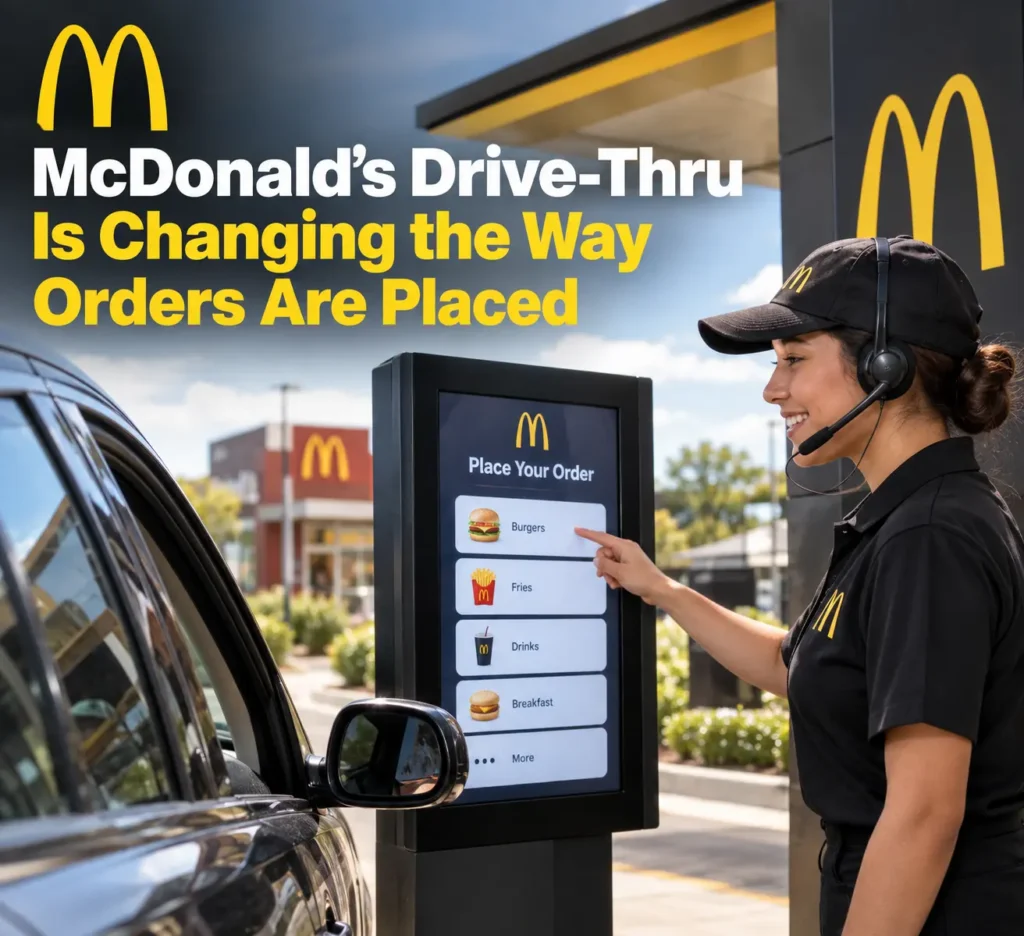

For many McDonald’s customers, the drive-thru has become more than a quick stop for a burger and fries. It offers a simple way to order food without leaving the car, making it especially useful for families, commuters and people travelling through busy city roads.
The idea is straightforward: customers drive into a designated lane, place their order, pay and collect the food from the pickup window. The process can save time compared with parking the car and ordering inside the restaurant.
How the McDonald’s Drive-Thru Works
A typical drive-thru is divided into several stages so vehicles can move through without unnecessary delays. Customers usually follow signs directing them to the ordering point, where they select items from the available menu.
After confirming the order, customers proceed to the payment area and then to the collection window. Depending on the restaurant and traffic at the time, the entire process can take only a few minutes.
| Stage | What happens |
|---|---|
| Order | Customer selects food and drinks |
| Payment | Bill is confirmed and paid |
| Pickup | Food is collected at the window |
What Customers Usually Order
The drive-thru experience is closely linked to McDonald’s most familiar menu items. Burgers, fries, beverages, wraps and value meals are popular choices because they are easy to carry and consume after leaving the restaurant.
For customers travelling with children, the format can also be convenient because the entire family does not need to enter the restaurant. During busy periods, however, queues can still form when several vehicles arrive at the same time.
Why the Drive-Thru Matters for Busy Cities
Traffic and long working hours have changed the way many urban customers think about eating out. A traditional restaurant visit can involve finding parking, waiting for a table and spending more time inside. A drive-thru removes several of those steps.
The format is particularly useful near highways, commercial areas and major roads where customers may want a quick meal while continuing their journey. It also gives McDonald’s restaurants another way to serve customers without relying entirely on indoor seating.
The Experience Is Not Always About Speed
Although speed is one of the biggest attractions, customers also expect accuracy and convenience. A missing item, incorrect order or long queue can quickly turn a supposedly quick stop into a frustrating experience.
For that reason, the ordering process, kitchen coordination and pickup system all play an important role. During breakfast hours, lunch rushes, evenings and weekends, demand can change significantly, making efficient service especially important.
What Makes a McDonald’s Drive-Thru Different?
The biggest appeal is convenience. Customers can place an order, pay and collect their meal while remaining in their vehicle. For people who are short on time, travelling with children or simply prefer not to enter a crowded restaurant, that convenience can make a noticeable difference.
As McDonald’s continues to operate across different markets, drive-thru locations remain an important part of its restaurant format. For customers, the appeal is ultimately simple: get the food they want with fewer steps between the road and the meal.