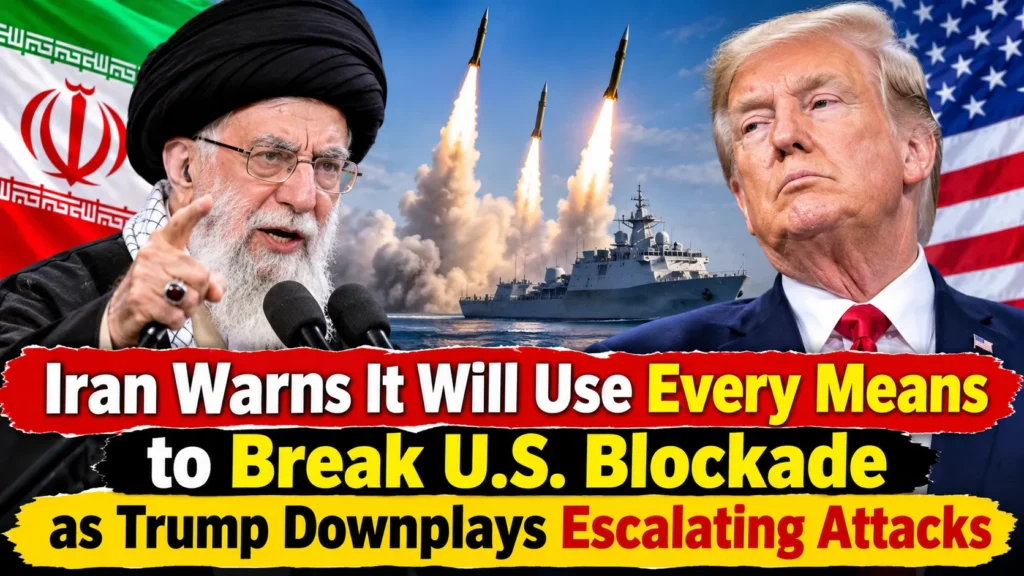

Iran Delivers Strong Warning Over U.S. Naval Blockade
U.S Tensions between Iran and the United States are rising again after Tehran warned that it would use every available means to challenge Washington’s naval blockade. The warning came on Monday, November 23, 2026, as the nearly nine-month conflict continued to threaten stability across the Middle East.
Iranian Foreign Ministry spokesperson Esmaeil Baghaei said the country would not accept the American blockade and considered it an act of military aggression. Speaking during a weekly press briefing, he argued that Iran had the right to defend itself against what Tehran considers an illegal economic and military campaign.
The statement raises fresh concerns about whether the conflict could enter another dangerous phase, particularly as both countries continue to disagree over control of important shipping routes and the conditions for ending the war.
Trump Downplays Iran’s Increasing Attacks
President Donald Trump has played down the impact of Iran’s latest military activity, despite acknowledging an increase in drone and missile attacks. U.S
In a social media statement on Sunday, Trump said Iran had launched more drones and missiles during the previous week than at any other point in the nearly nine-month conflict. However, he claimed the attacks had caused no damage.
His comments suggest that Washington is not viewing the latest Iranian activity as a reason to immediately change its position. Nevertheless, the growing number of reported attacks highlights how fragile the situation remains.
The difference between Trump’s assessment and Tehran’s increasingly forceful warnings also reflects the deep disagreement between the two governments over the direction of the conflict.
Strait of Hormuz Remains at the Center of the Crisis
The Strait of Hormuz continues to be one of the most important pressure points in the confrontation. The narrow waterway connects the Persian Gulf with the Gulf of Oman and is a major route for international oil shipments.
Iran has maintained that it controls passage through the strait and has linked its reopening to Washington meeting several conditions. These include ending hostilities, lifting the naval blockade and removing sanctions.
The United States, meanwhile, has maintained restrictions on Iranian ports and oil shipments as part of its pressure campaign against Tehran. U.S
Any further disruption in the strait could have consequences far beyond the Middle East. Shipping companies, energy markets and countries dependent on imported oil are closely watching developments because delays or attacks could increase transportation costs and put pressure on fuel prices.
U.S. Blockade Has Hit Iran’s Oil Exports
The American blockade has significantly reduced Iran’s ability to export crude oil. Visible Iranian oil exports have fallen close to zero in recent months, according to reporting by Reuters.
The restrictions were initially introduced on April 13, lifted in June after a draft understanding between Washington and Tehran, and restored on July 14 after that arrangement collapsed.
Reports have also suggested that a tanker may have been loading Iranian crude through a ship-to-ship transfer. If completed successfully, the shipment could represent an important attempt to bypass the restrictions.
However, Baghaei dismissed reports about Iranian ships loading oil as speculation.
Yemen Fighting Adds Another Layer of Tension
The wider regional situation is also becoming more complicated as fighting involving Iran-backed Houthi forces continues in Yemen.
On Monday, a Houthi-linked media outlet reported that a Saudi attack on the Yemeni port city of Hodeida killed four people and injured 18 others. The reported incident adds to concerns that the confrontation could spread across several countries.
Saudi Arabia and the Houthis have been involved in a prolonged conflict, and renewed fighting could create additional risks for regional security and trade.
What Happens Next in the U.S.-Iran Conflict?
For now, neither Washington nor Tehran appears ready to abandon its central demands. Iran wants the American blockade lifted, while the United States continues to use economic and maritime pressure to influence Tehran.
The biggest question is whether diplomatic efforts can prevent another round of military escalation. With the Strait of Hormuz still a major point of disagreement, even a single serious incident involving a commercial vessel or military force could make negotiations more difficult.
Frequently Asked Questions
1. Why is Iran threatening the United States?
Iran is threatening to challenge the U.S. naval blockade, which it considers an act of military aggression that restricts its oil exports and maritime trade.
2. What is the U.S. blockade against Iran?
It is a set of American naval restrictions targeting Iranian ports and oil shipments, designed to increase economic pressure on Tehran.
3. Why is the Strait of Hormuz important?
The Strait of Hormuz is a major international shipping route through which a substantial share of the world’s oil supplies traditionally passes. Disruptions can affect global energy markets and shipping costs.



Pingback: Bitcoin and Stocks Slide as Jensen Huang Signals Nvidia Comeback, Leaving Investors on Edge - GyanDe.Com