
California’s Famous Coastline Is Changing
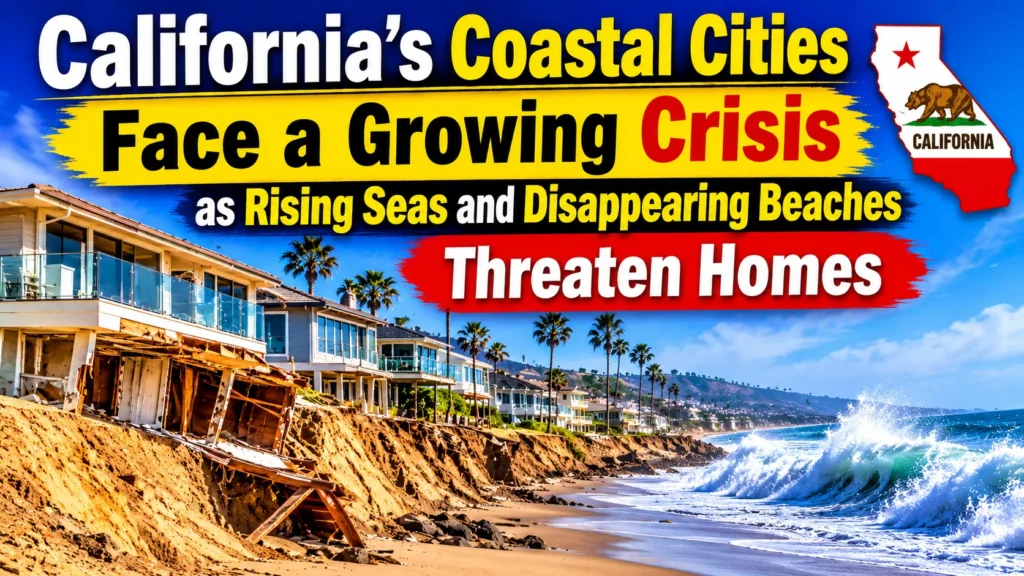
California’s beautiful coastline is facing an increasingly serious challenge as rising sea levels, powerful ocean waves and coastal erosion continue to reshape its beaches. Communities that once attracted visitors with wide sandy shores are now dealing with shrinking beaches, damaged properties and growing concerns about flooding.
From San Clemente and Dana Point to Malibu and Santa Cruz, the effects are becoming harder to ignore. In some locations, waves are reaching areas that were previously protected by wide stretches of sand. Residents are also worried about the future of oceanfront homes, roads and public spaces.
The situation is becoming more difficult as climate change raises ocean levels and increases pressure on already vulnerable coastal areas.
Rising Sea Levels Put Coastal Communities at Risk
Higher sea levels allow waves to travel farther inland, increasing the risk of flooding and erosion during storms and unusually high tides. Coastal communities are particularly vulnerable because many homes, roads and businesses sit close to the water.
In Dana Point, Southern California, years of erosion have removed large amounts of sand from Beach Road. Ocean waves have moved closer to residential properties, leaving some homeowners facing serious structural concerns.
Reports indicate that 10 homes have been declared uninhabitable, while other properties require urgent repairs. For residents, the problem is no longer simply about losing beach space. It is becoming a direct threat to their homes and financial security.
San Clemente Faces a Serious Beach and Infrastructure Problem
San Clemente has become one of the clearest examples of California’s coastal erosion challenge. The city has experienced significant beach loss, while oceanfront bluffs have become increasingly unstable.
The damage is also affecting transportation. A major passenger rail corridor connecting San Diego with Los Angeles and other California communities has faced repeated closures because of coastal erosion and landslide risks.
Officials have explored different ways to protect the shoreline, including adding sand to beaches and strengthening coastal defenses. However, these projects require significant investment and may not provide permanent protection.
San Clemente also faces a difficult decision about how to protect its coastline while maintaining public access to its popular beaches.
Stronger Storms Could Make Beach Erosion Worse
The combination of rising ocean levels and powerful Pacific storms is creating additional pressure on California’s coastline. Strong waves can remove large quantities of sand in a short period, exposing roads, buildings and other infrastructure.
An especially concerning factor is the possibility of a strong El Niño bringing more powerful winter storms and larger waves.
Malibu, Oceanside and other coastal communities have already experienced serious erosion problems. In some areas, protective rock barriers have become necessary to prevent further damage to roads and nearby structures.
However, these barriers can also affect natural sand movement, making long-term beach protection more complicated.
The Economic Cost of Disappearing Beaches
California’s beaches are important not only for recreation but also for local economies. Tourism, restaurants, hotels, surf businesses and other coastal industries depend on visitors who come to enjoy the shoreline.
When beaches become smaller or difficult to access, local businesses can lose customers. Property owners may also face expensive repairs, higher insurance costs and uncertainty about future property values.
A November 2026 research study published in Ocean & Coastal Management estimates that California could lose more than 17% of its beach area by 2050 under different sea-level-rise scenarios.
The potential impact could be particularly serious for tourism-dependent communities, where even relatively small reductions in beach space may affect local revenue.
Can California Save Its Disappearing Beaches?
State and local officials are considering several approaches to protect vulnerable coastal areas. Beach nourishment, which involves adding sand to eroding beaches, is one commonly used method.
Other efforts include restoring coastal dunes and wetlands, improving natural sand movement and planning infrastructure around future sea-level conditions.
However, experts recognize that repeatedly adding sand or building stronger barriers cannot solve every problem. Some communities may eventually need to move roads, railways and other infrastructure away from vulnerable shorelines.
California’s coastline has always changed naturally, but rising sea levels and human development are making the challenge more complicated. The decisions made today could determine whether future generations can enjoy the same beaches that have defined the state for decades.
FAQs
1. Why are California’s beaches disappearing?
California’s beaches are shrinking because of rising sea levels, coastal erosion, powerful storms and changes in the natural movement of sand.
2. Which California cities are most affected by coastal erosion?
San Clemente, Dana Point, Malibu, Oceanside and Santa Cruz are among the communities experiencing significant coastal erosion and beach-related challenges.
3. Can California prevent its beaches from disappearing?
California can slow beach loss through sand replenishment, dune restoration, wetland protection and improved coastal planning. However, permanently protecting every beach may not be possible as sea levels continue to rise.