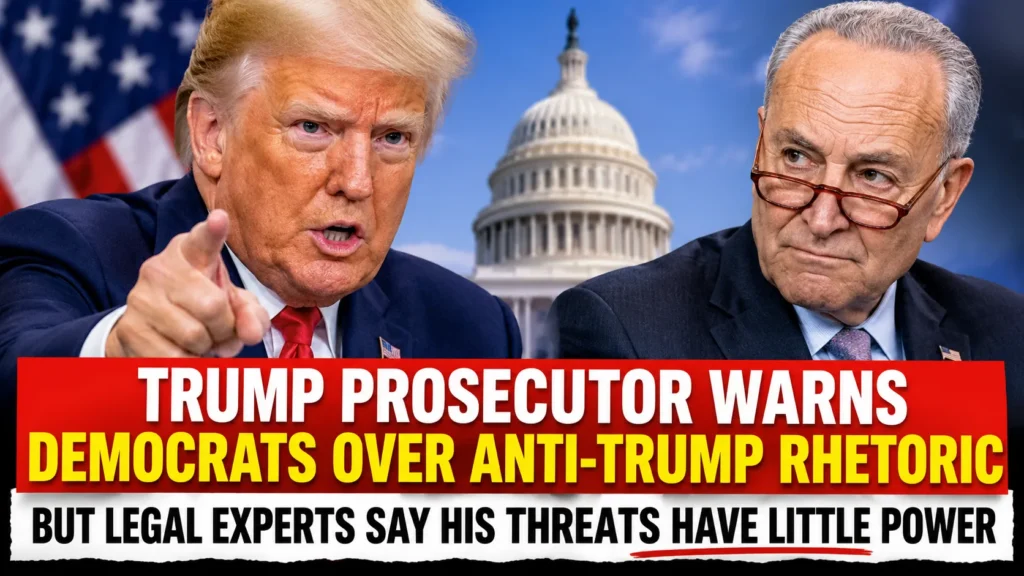

A growing legal and political fight is emerging between President Donald Trump’s administration and congressional Democrats after a U.S. attorney warned lawmakers that their plans to investigate Trump and his allies could lead to criminal consequences. However, several legal experts are dismissing the warning, arguing that the Constitution gives Congress broad authority to investigate the federal government.
The controversy has placed U.S. Attorney Aaron Reitz under scrutiny as Democrats prepare to use their congressional oversight powers. Critics say the letters appear designed to intimidate lawmakers before they begin investigating the administration.
Aaron Reitz Sends Legal Warnings to Democratic Lawmakers
Aaron Reitz, the U.S. attorney for the Southern District of Texas, has sent warning letters to several Democratic lawmakers over their public statements about investigating the Trump administration.
Among those targeted are Senators Elissa Slotkin, Richard Blumenthal and Elizabeth Warren, along with Senator Adam Schiff and Representative Robert Garcia.
Reitz argued that some Democrats’ statements about holding Trump administration officials accountable could potentially cross legal boundaries. He raised concerns that congressional investigations might be used to punish individuals associated with the president rather than serve legitimate legislative purposes.
The letters also asked lawmakers to preserve relevant documents and communications connected to their public statements.
Legal Experts Say the Threats Have Little Legal Foundation
Several constitutional law experts believe Reitz’s warnings are legally weak and should not prevent Democrats from carrying out their responsibilities.
Their main argument centers on the Constitution’s Speech or Debate Clause, which protects members of Congress from certain legal consequences arising from their legislative activities.
Experts say lawmakers generally have substantial protection when discussing, conducting and pursuing legitimate congressional investigations.
Stan Brand, a former House general counsel, described the warnings as political saber-rattling rather than a serious legal threat. He advised Democrats against giving the letters additional attention or treating them as legitimate restrictions on congressional authority.
Georgetown University law professor Steve Vladeck also questioned the legal approach, describing the letters as overly aggressive and unlikely to produce an immediate constitutional confrontation.
Why Democrats Have the Right to Investigate Trump
Congressional oversight is an important part of the American system of government. Lawmakers have the responsibility to examine federal agencies, investigate possible misconduct and demand answers about how public authority is being used.
When Democrats take control of congressional committees, they are expected to examine several issues involving the Trump administration.
These could include potential conflicts of interest, executive branch decisions, government spending and the conduct of federal officials.
However, congressional investigations must still serve a legitimate legislative purpose. The Constitution does not give lawmakers unlimited authority to investigate individuals for personal or political reasons.
Legal experts argue that simply expressing an intention to investigate government officials does not automatically establish criminal wrongdoing.
Elissa Slotkin Pushes Back Against the Warning
Senator Elissa Slotkin has strongly rejected the suggestion that her public statements could justify criminal investigations.
Rather than backing away, the Michigan Democrat challenged the legal threats and made clear that she would not allow them to stop her from performing her duties.
Richard Blumenthal has also rejected the warnings, describing the implied threat of an investigation as baseless.
The Democratic lawmakers argue that congressional oversight is a constitutional responsibility, not an attempt to intimidate political opponents.
Their response highlights how the dispute is becoming part of a larger confrontation over the independence of Congress and the power of the executive branch.
A Bigger Constitutional Battle Could Be Coming
The disagreement may become more serious once Democrats begin using subpoenas, holding hearings and demanding documents from Trump administration officials.
At that stage, the administration could challenge particular investigations by arguing that they lack a legitimate legislative purpose.
Legal experts say those disputes would need to be examined individually rather than treated as criminal based on lawmakers’ earlier political comments.
The larger concern is whether legal threats could discourage Congress from investigating the executive branch.
For now, experts largely agree that Democrats should not abandon their oversight responsibilities simply because a federal prosecutor has questioned their public statements. The coming months could test the boundaries of congressional authority and executive power in Washington.
FAQs
1. Who is Aaron Reitz?
Aaron Reitz is the U.S. attorney for the Southern District of Texas who sent warning letters to Democratic lawmakers concerning their plans for congressional investigations of the Trump administration.
2. Why do legal experts say Democrats can ignore the warnings?
Experts point to the Constitution’s Speech or Debate Clause and the broad authority Congress has to conduct legitimate oversight investigations.
3. Which Democratic lawmakers received legal warnings?
The lawmakers named in reports include Elissa Slotkin, Richard Blumenthal, Elizabeth Warren, Adam Schiff and Robert Garcia. Their planned oversight activities have become the focus of the dispute.



Pingback: Tom Jackson Dies at 75: Former ESPN Analyst and Denver Broncos Legend Leaves Lasting NFL Legacy - GyanDe.Com