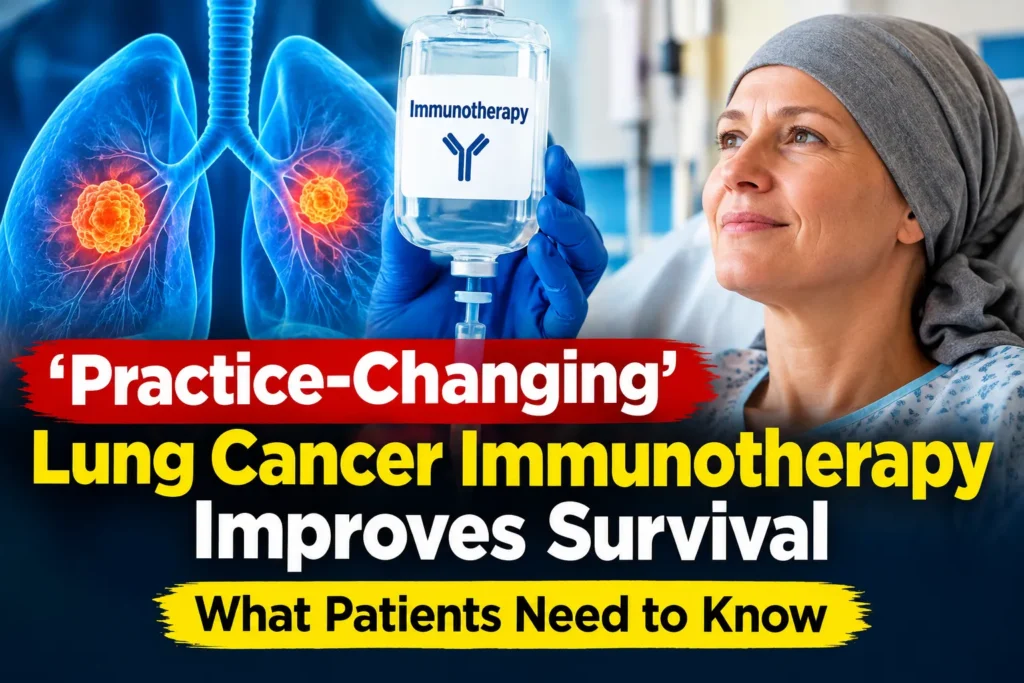

A new approach to lung cancer immunotherapy is raising hopes for patients after research showed improved survival. The findings could help change how doctors treat certain forms of the disease, offering a potential new option for people facing one of the world’s most challenging cancers.
Immunotherapy works differently from traditional chemotherapy. Instead of directly attacking cancer cells, it helps the body’s immune system recognise and fight them. For some patients, this approach has already transformed treatment, but many still need therapies that can control the disease for longer.
The latest findings have attracted attention because better survival outcomes can mean more time with loved ones and a greater chance of living with the disease under control. The precise benefits, however, depend on the treatment studied, the cancer’s stage and the characteristics of each patient’s tumour.
Why the New Lung Cancer Treatment Matters
Lung cancer remains a major cause of cancer-related deaths worldwide. It is often diagnosed after the disease has spread, making treatment more difficult. Even when patients respond well initially, the cancer can sometimes return or become resistant to therapy.
This is why improvements in survival are so important. A treatment that helps patients live longer, particularly when combined with established care, could make a meaningful difference to families and healthcare teams.
The phrase “practice-changing” suggests that researchers believe the evidence may influence clinical decisions. However, doctors must consider the size of the survival benefit, possible side effects and the quality of the clinical trial evidence before changing standard treatment.
How Immunotherapy Helps the Body Fight Cancer
Cancer cells can develop ways to hide from the immune system. Some immunotherapy medicines target proteins that act like brakes on immune cells, allowing the body’s natural defences to attack cancer more effectively.
These drugs are known as immune checkpoint inhibitors. Depending on the medicine and the type of lung cancer, doctors may prescribe immunotherapy alone or combine it with chemotherapy, surgery or radiation.
Not every patient responds in the same way. Some experience long-lasting benefits, while others see little improvement. Researchers are therefore working to identify which patients are most likely to benefit and how treatments can be made more effective.
What Improved Survival Could Mean for Patients
Survival results are among the most important measures in cancer research, but the details matter. Overall survival measures how long patients live after entering a study, while progression-free survival measures how long they live without their cancer worsening.
A reported improvement in one measure does not automatically mean the same improvement in another. Patients also need information about treatment duration, side effects, daily functioning and whether the benefits outweigh the risks.
Immune-based treatments can cause inflammation in healthy organs, including the lungs, bowel, liver and thyroid. Some reactions are mild, while others can be serious and require prompt medical attention. Careful monitoring is essential throughout treatment.
Who Could Benefit From the Treatment?
The answer depends on the specific immunotherapy regimen and the clinical trial results. Lung cancer includes different diseases, particularly non-small cell lung cancer and small cell lung cancer, and each can respond differently to treatment.
Doctors may consider the cancer’s stage, tumour biomarkers, previous therapies, overall health and other medical conditions when deciding whether immunotherapy is appropriate.
Patients should ask their oncology team whether the treatment applies to their diagnosis, whether it is approved or available in their country, and what alternatives exist. A promising trial result is encouraging, but it does not mean every person with lung cancer should receive the same medicine.
Key Facts About Lung Cancer Immunotherapy
| Treatment detail | What it means |
|---|---|
| Main purpose | Helps the immune system attack cancer |
| Treatment options | Immunotherapy alone or combined with other therapies |
| Important consideration | Cancer type, stage and individual response |
Frequently Asked Questions
1. Can immunotherapy cure lung cancer?
Immunotherapy can produce long-lasting responses in some patients, but it does not cure every case. The outcome depends on the cancer type, stage and response to treatment.
2. Is immunotherapy better than chemotherapy?
Neither treatment is always better. Doctors may recommend immunotherapy alone, chemotherapy alone or a combination, depending on the patient’s diagnosis and test results.
3. What side effects can lung cancer immunotherapy cause?
Possible side effects include fatigue, skin reactions, diarrhoea and inflammation affecting healthy organs. Patients should report new or worsening symptoms to their medical team promptly.